
How do I get my sales reps to actually practice objection handling instead of just sitting through training?
The short answer
Replace passive training with graded reps: role-play drills scored against a rubric, logged weekly, tied to a live deal they're working. One-time workshops produce near-zero behavior change without reinforcement. Give reps 10-15 minutes of scenario practice twice a week, reviewed by a manager or AI voice simulator, and measure objection-to-close conversion monthly to prove it's working.
Training sticks for about 30 days, then disappears
Most sales training is a single event: a workshop, a webinar, an onboarding module. Research on the spacing effect in learning retention consistently shows that information presented once and never revisited is forgotten within weeks regardless of how good the initial session was. Objection handling is a motor skill, not a fact to memorize — it has to be rehearsed under mild pressure, repeatedly, or it doesn't transfer to a live call. A rep who watched a great objection-handling webinar in January is functionally untrained by March if nothing reinforced it in between.
The fix isn't better training content. It's a different delivery model: short, frequent, graded practice reps instead of long, infrequent lectures.
What "actual practice" looks like versus what most companies do
| Approach | Frequency | Feedback loop | Behavior change |
|---|---|---|---|
| Annual sales training event | Once or twice a year | None after the session | Minimal — fades in 30-60 days |
| Recorded e-learning modules | Self-paced, often skipped | Quiz at the end, no coaching | Low — tests recall, not delivery |
| Live role-play with manager | Weekly or biweekly | Direct, immediate | Moderate — depends on manager consistency |
| Scripted drills + scoring rubric | 2x/week, 10-15 min | Scored against specific criteria | High — measurable skill curve |
| AI voice simulation + rubric | 2-3x/week, on demand | Instant, consistent, repeatable | High — removes manager bottleneck |
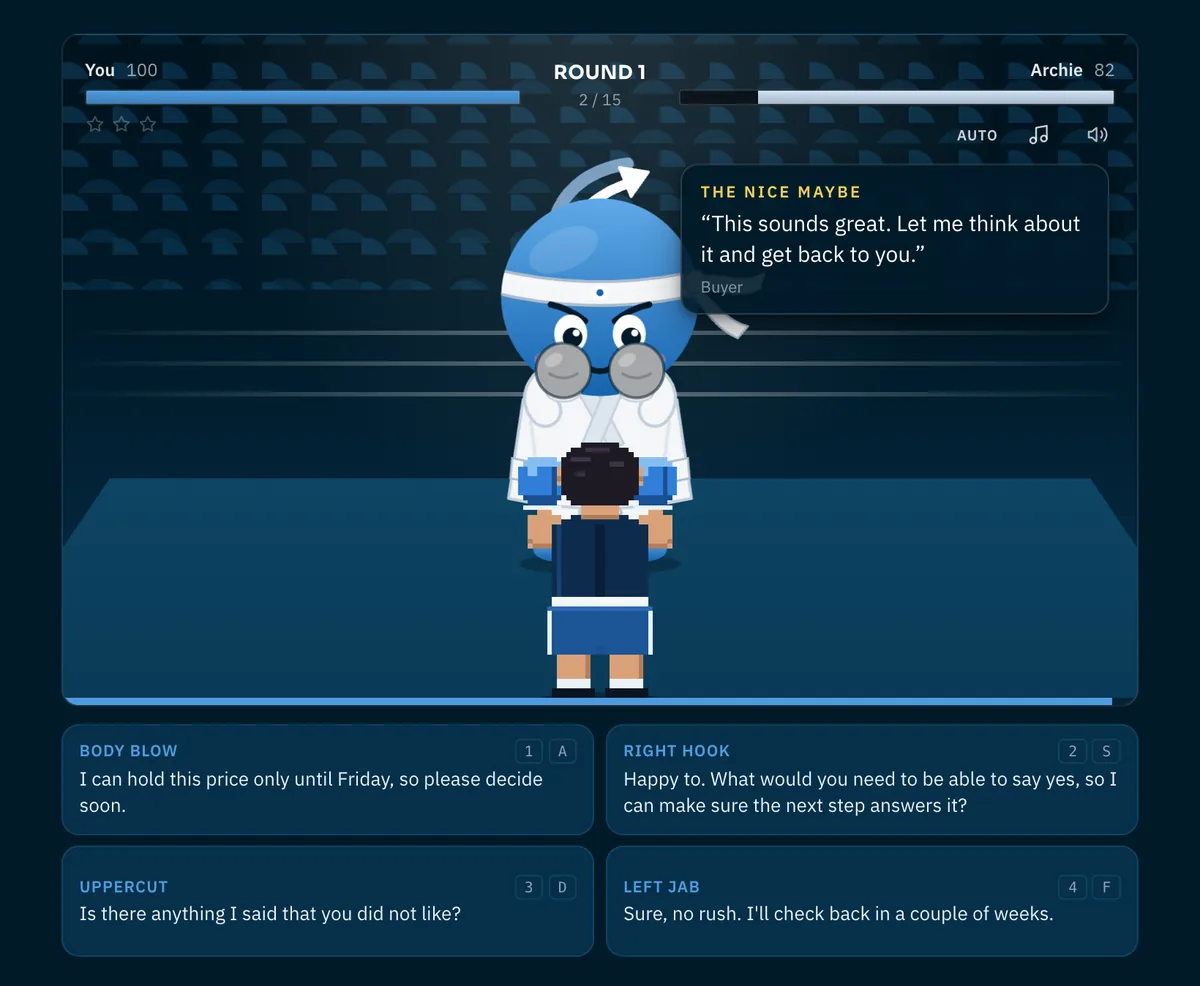
The jump that matters is from "training happened" to "training is scored." If a rep's objection-handling rep isn't graded against specific criteria — did they acknowledge the objection, reframe it, ask a clarifying question, close with a next step — nobody can tell if they're actually getting better or just getting more confident while making the same mistakes.
Build the rubric before you build the habit
A practice cadence without a rubric just produces reps who feel like they're improving. Define 4-6 scorable behaviors per common objection type ("too expensive," "need to think about it," "happy with current vendor") and grade every rep drill against them. This should live in the same playbook that documents your sales process — if objection responses aren't written down with example language, reps default to improvising, and improvising under pressure is exactly the behavior you're trying to train out.
Tie the rubric to real objections your team hears, not generic ones from a training vendor's deck. Pull the last 20 lost-deal notes from your CRM, categorize the objections that came up, and build drills around those specific patterns. This is also the fastest way to find out if the real problem is messaging, not rep skill — sometimes reps are handling objections fine and the product positioning upstream is what's broken.
Make it mandatory, short, and frequent — not optional and long
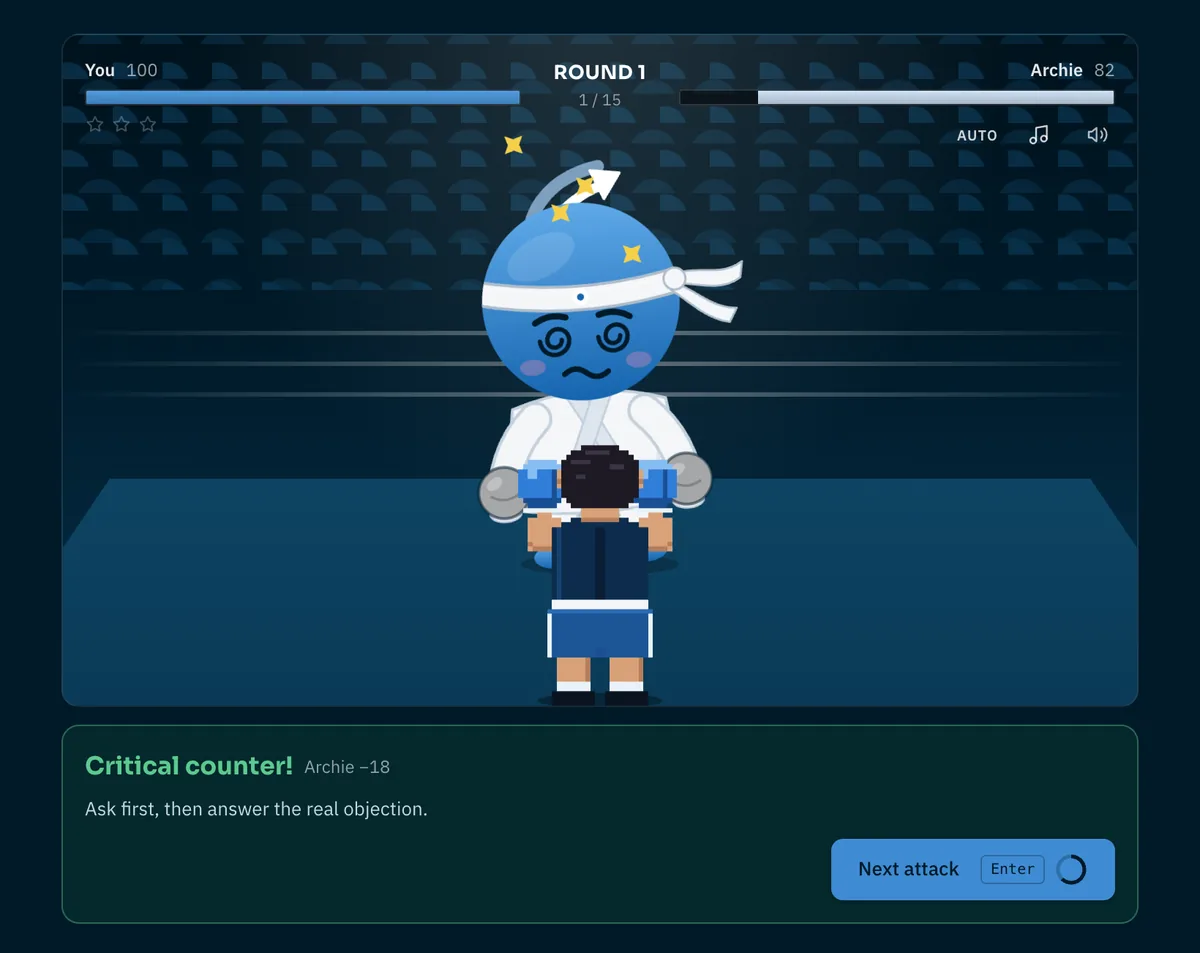
Twice-weekly 10-15 minute drills beat a quarterly half-day workshop by a wide margin, because frequency is what builds the muscle. Put it on the calendar as a recurring meeting block, not an "as needed" activity — optional practice gets skipped the first time a rep has a busy week, and then it's gone for good. Rotate who plays the prospect: manager one week, a peer the next, an AI simulation the week after. Variety in who's pushing back keeps reps from memorizing responses to one person's delivery style instead of genuinely internalizing the technique.
Track a simple metric monthly: objection-to-close conversion rate, pulled straight from CRM stage movement. If drills are working, that number moves. If it doesn't move after 60-90 days of consistent practice, the rubric or the objections you're drilling are wrong, not the concept of drilling itself.
Where SalesARC fits
SalesARC Playbook documents the specific objection patterns and scripted responses your team should be drilling against, built from your actual lost-deal data rather than generic sales theory. SalesARC University adds ongoing reinforcement — short, repeatable training modules designed for the frequency this kind of skill-building actually requires, rather than a one-time course. Neither replaces the discipline of putting practice on the calendar, but both give you a scoreable starting point. See /product/playbook.