
How do I onboard a new customer in the first 30 days so they do not churn?
The short answer
Hit three milestones in 30 days: a kickoff call within 48 hours, first value delivered by day 14, and a documented success plan signed off by day 30. Most churn in founder-led B2B companies traces to vague handoffs between sales and delivery, not product quality. Assign a single owner and track time-to-first-value as your core metric.
Why the first 30 days decide retention
Research on SaaS and service churn consistently points to the first 30 to 90 days as the window where most customers decide whether to stay. ProfitWell's churn analysis found that companies with structured onboarding programs see meaningfully lower first-year churn than those that treat onboarding as an informal handoff from sales. The mechanism is simple: customers buy based on a promise, and if the gap between "what we signed up for" and "what's actually happening" grows unaddressed for even two or three weeks, doubt sets in and renewal conversations start from a deficit.
For founder-led B2B companies, this gets worse because the founder closed the deal personally, built trust, and then often disappears into the next sale while an undocumented handoff happens to whoever is left to deliver. The customer notices the change in attention immediately.
A 30-day structure that actually works
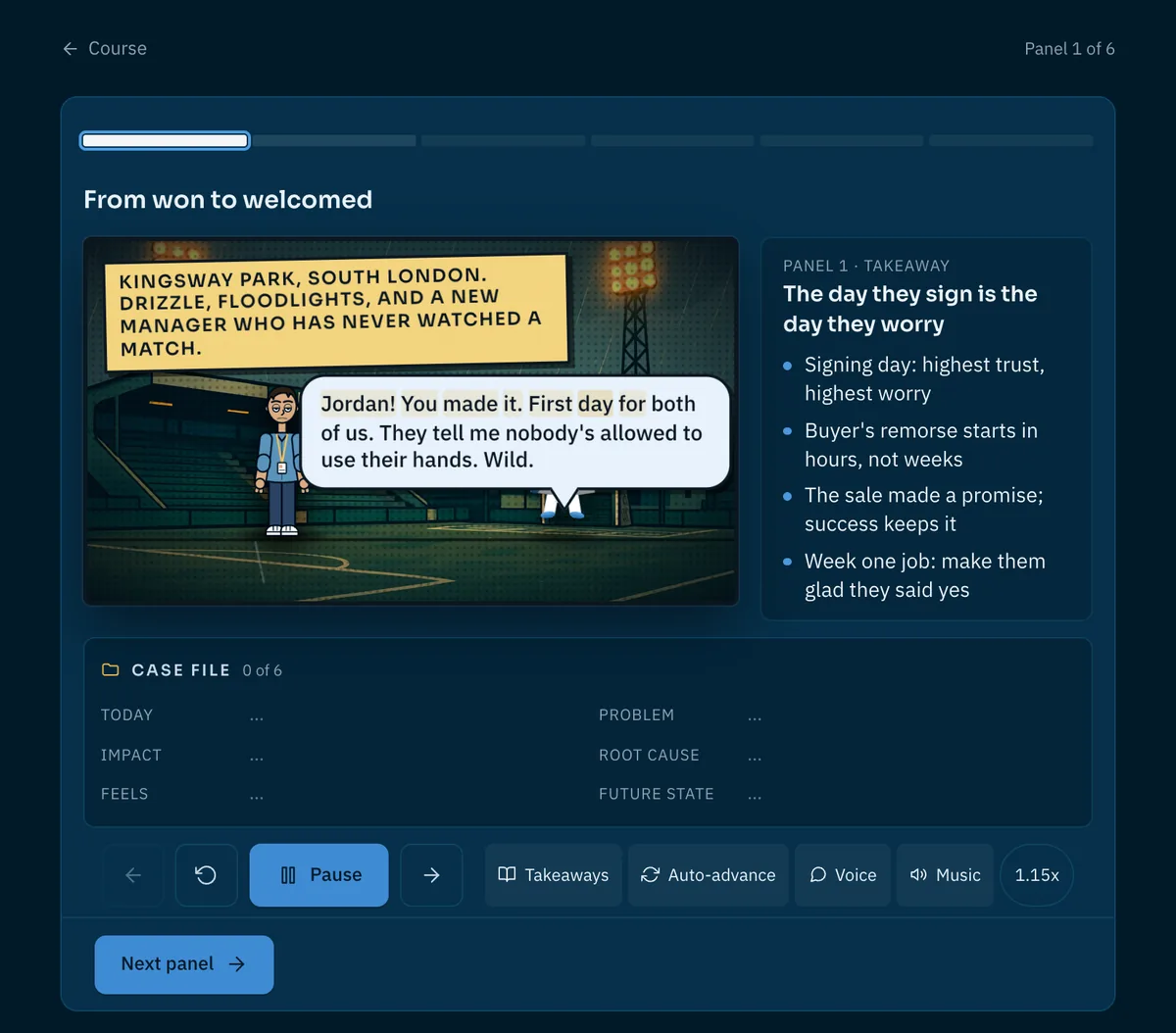
Day 0 to 2: kickoff call. This is not a status update — it's where you restate the specific outcome the customer bought, assign a named point of contact, and set the cadence for check-ins. Skipping this or delaying it past 48 hours is the single most common onboarding failure.
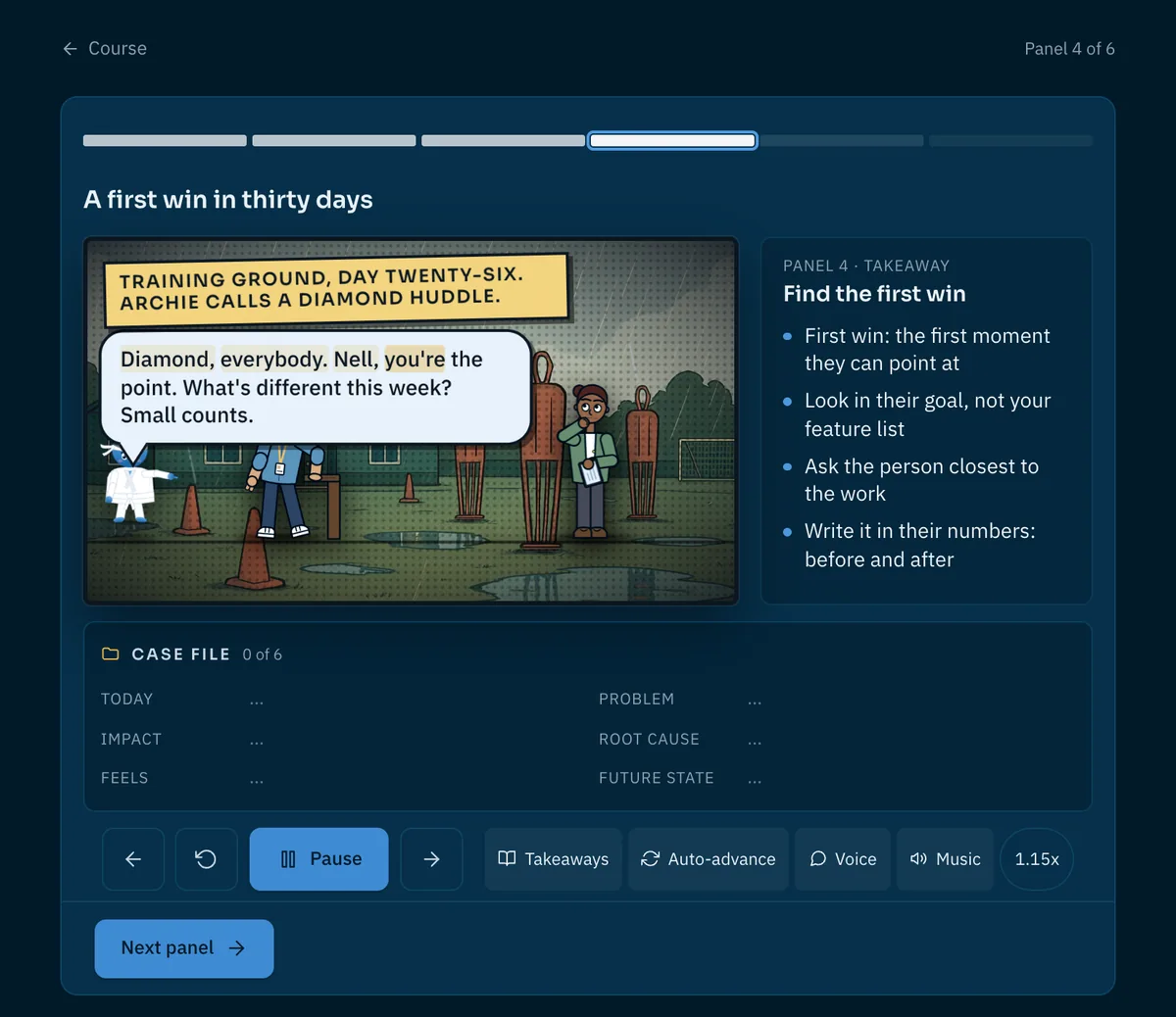
Day 3 to 14: first value delivered. This is the make-or-break window. Define in writing what "first value" means for your specific product — a completed integration, a first qualified lead delivered, a first report generated — and build the entire first two weeks around hitting it. If you can't define first value in one sentence, your onboarding plan isn't ready yet.
Day 15 to 25: usage check and course correction. By now you should have data: is the customer actually logging in, using the feature, responding to outreach? If not, this is the moment to intervene, not day 60 when the renewal conversation starts.
Day 26 to 30: documented success plan. A short written document — what's been delivered, what's next, who owns what — gets signed off by the customer. This isn't bureaucracy; it's the artifact that turns a vague good feeling into a concrete commitment both sides can point back to.
| Day Range | Milestone | Who Owns It | Signal of Trouble |
|---|---|---|---|
| 0–2 | Kickoff call | Account owner | Call pushed past day 3 |
| 3–14 | First value delivered | Delivery lead | No measurable outcome by day 14 |
| 15–25 | Usage check | Account owner | Low or no product/service engagement |
| 26–30 | Success plan signed | Account owner | Customer unresponsive to plan review |
The handoff problem, specifically
The most avoidable churn driver is the sales-to-delivery handoff. If the account executive who closed the deal doesn't personally introduce the delivery team and restate the commitments made during the sale, the customer effectively starts over with strangers. A documented handoff checklist — what was promised, what pricing tier, what timeline, what the customer's internal stakeholders expect — should move with the account, not live only in the closer's head or a Slack thread nobody else can find.
Companies without a CRM or playbook often lose this information entirely between close and kickoff, which is why onboarding failures and CRM adoption failures tend to show up in the same companies.
What to track instead of just "did they churn"
Time-to-first-value is the leading indicator that predicts churn before it happens. If your average customer takes 45 days to see first value and your contract renews annually, you're spending a tenth of the relationship just getting started — track this number explicitly and treat anything trending upward as an emergency, not a footnote in a QBR deck.
Net revenue retention and logo churn are lagging indicators; by the time they move, the damage is done. A weekly onboarding dashboard showing where every active customer sits against the 30-day milestones gives you a chance to intervene while it still matters.
Where SalesARC fits
A documented onboarding sequence is one component of a broader sales playbook — the same document that should define your ICP, qualification criteria, and pipeline stages also needs to define what happens after the deal closes. SalesARC Playbook builds this handoff and onboarding structure as part of a documented, role-specific sales process so founders stop losing new customers to an undefined first 30 days. Learn more at /product/playbook. For the people who run those first thirty days, SalesARC University teaches them as a short Customer Success course, from the kickoff to a first win.